This year’s New Hanover County and state races involve multiple candidates campaigning on topics ranging from infrastructure to film incentives.
Five candidates are vying for two seats on the New Hanover County Board of Commissioners, while two candidates are running to represent District 7 in the state senate: incumbent Sen. Michael Lee, a Republican, and newcomer Jessica Bichler, a Democrat.
In the state House of Representatives race, incumbent Rep. Deb Butler, a Democrat, will face Latisha Grady, a Republican, for the District 18 seat. Incumbent Rep. Charlie Miller, a Republican, faces small business owner Scott Nasiff, a Democrat, for the District 19 seat. New Hanover County Commissioner Dane Scalise, a Republican, is facing New Hanover County School Board member and Democrat Tim Merrick for the District 20 seat.
The candidates competing for county board of commissioners’ seats are incumbents LeAnn Pierce, the current chair of the board, and Rob Zapple. The others are Richard Collier, Bob Drach and LeShonda Wallace.
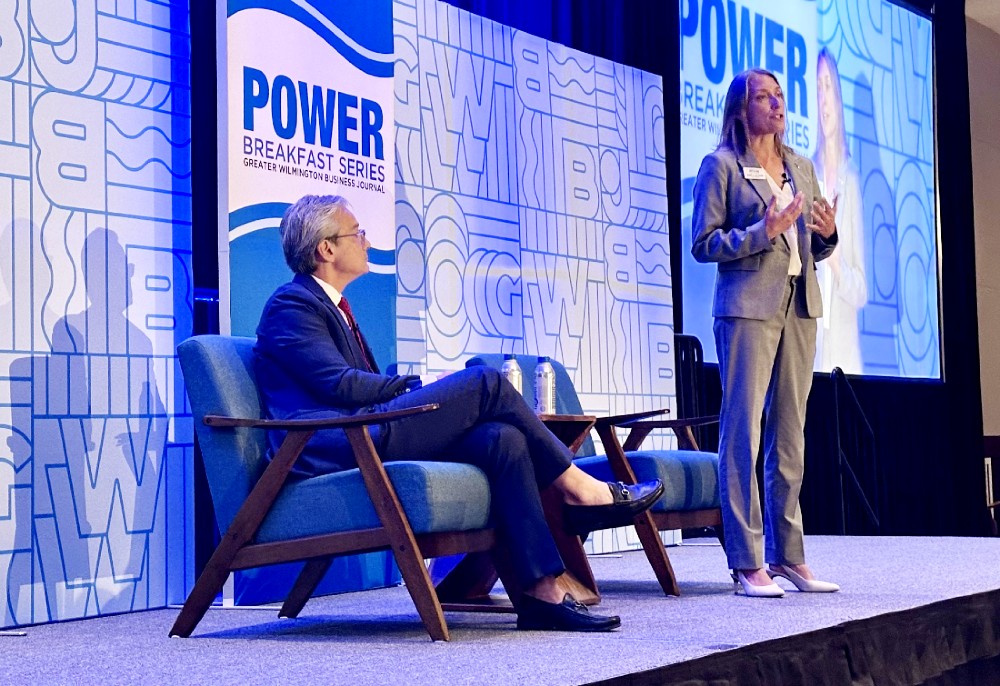
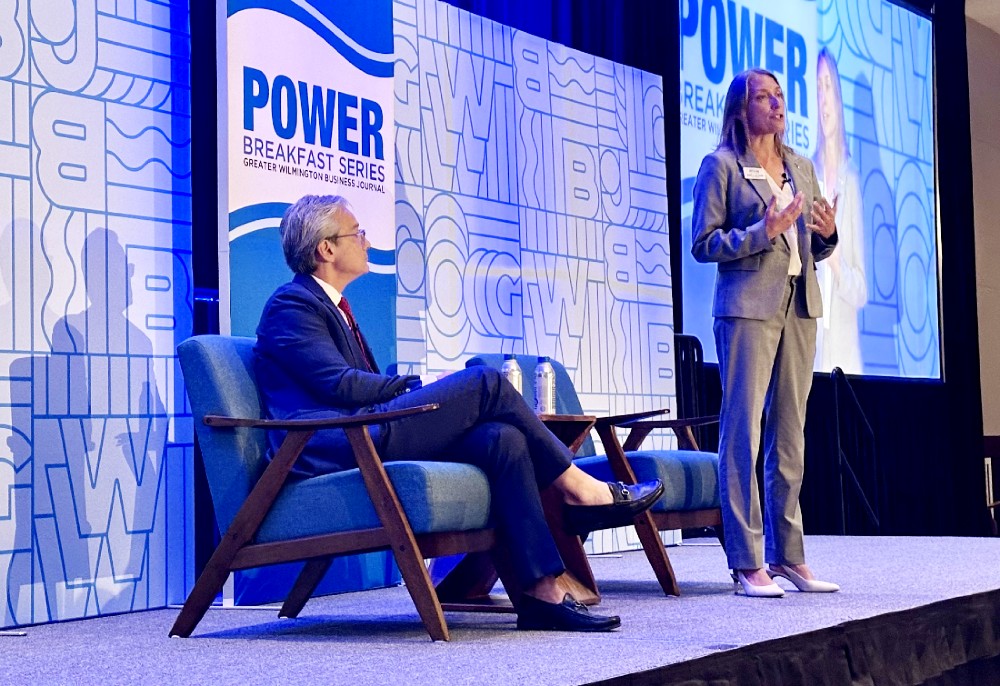
All of the candidates featured in this section also participated in the Greater Wilmington Business Journal Power Breakfast on Sept. 3, and the discussion can be viewed online on the Business Journal’s YouTube channel, @WilmingtonBizJournal.
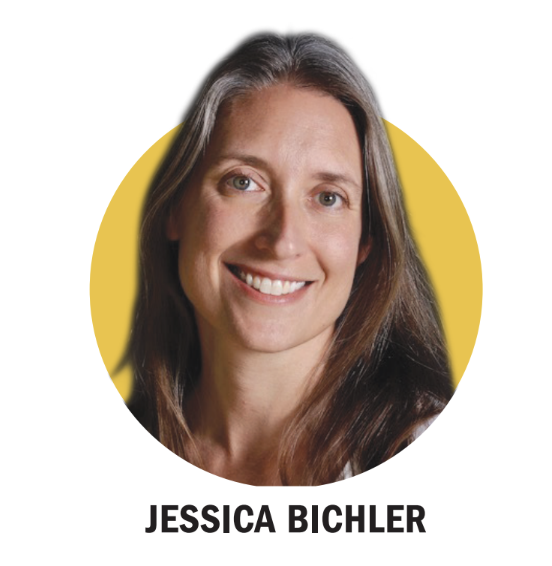
JESSICA BICHLER
Occupation: Small business owner
 Political experience: None
Political affiliation: Democrat
If elected, what changes would you like to see in your district during your term? Bichler: “Short-term, I’d like to stop the unchecked expansion of private school vouchers and redirect money back into our public schools as is required by our state constitution. I’d also like to see lower healthcare costs for New Hanover County residents, investments in our infrastructure and more protections for the water and wetlands our local economy relies on.
"Long-term, I would like to see fair maps for the people of New Hanover County so all residents, including those in downtown Wilmington, truly have a say in who represents them in Raleigh.”
What challenges do you see at the state level that could impact the district? Bichler: “A lack of funding for public schools puts our kids at risk and prevents them from having the educational experiences they deserve.
"A lack of investment at the state level impacts the quality of our infrastructure. Finally, a lack of proper regulations surrounding water use and development damages the environment our local economy needs to thrive.”
What do you think about the possibility of a toll to fund the Cape Fear Memorial Bridge replacement? Bichler: “We must find another alternative. Families are struggling, and the last thing they need is another expense. A toll to fund Cape Fear Memorial Bridge unfairly impacts residents here in New Hanover County as well as the Leland area.
"I also think it was rather disingenuous of the lawmakers, who said that we needed to add a toll option into the proposal to strengthen our ability to win funding, implying that they intended to not impose a toll. And now that we’ve gotten the promise of federal funding, they are telling us a toll is the only way. It was a real bait and switch.”
If elected, which industry would you like to see grow in the district? Bichler: “Healthcare. It’s the county’s largest employer, and three systems want to build here: Novant, which owns our only hospital; UNC Health, the state’s public system; and Atrium, the state’s largest, out of Charlotte. Atrium’s own (Certificate of Need) filing calls this an uncompetitive market. They’re competing for the same 225 beds, and the state decides who gets them. Competition would mean better healthcare and more jobs all at once.
"I want that growth to be academic medicine. UNCW has approval to plan North Carolina’s first new public medical school in 50 years, and it needs clinical partners and state-funded residency slots. And doctors tend to stay where they trained.”
What do you think you bring to the role that is unique and how? Bichler: “My top priority is the well-being of our community, not political career aspirations.”
SEN. MICHAEL LEE
Occupation: Lawyer
Political experience: N.C. Senate, District 7; Senate Majority Leader. Previously, chairman of the N.C. State Ports Authority and a member of the N.C. Board of Transportation.
Political affiliation: Republican
 If elected, what changes would you like to see in your district during your term? Lee: "New Hanover County is growing, and my focus is ensuring the basics keep up. First, I have authored a Water Safety Act in every term I have served since GenX was discovered. This year's budget put $45 million into the Emerging Contaminant Mitigation Fund and placed a moratorium on new inter-basin transfers out of the Cape Fear. I want that work finished, with polluters paying for cleanup rather than our ratepayers. Second, roads and infrastructure. Our growth is outpacing our transportation network. The projects that move traffic through this county must keep pace with the growth already approved. Third, the education pipeline. From K12 through Cape Fear Community College and UNCW. The planned medical school at UNCW will keep more doctors and nurses here, and I intend to help see it through. Fourth, cost of living. Housing, insurance, and utility costs are the pressure most families actually feel. The legislature does not set any of those rates, but we do write the statutes those decisions are made under, and we set the tax burden. Finally, resilience. We are a coastal county, and storm preparation is not optional."
What challenges do you see at the state level that could impact the district? Lee: "Growth is the common thread. The state's population is moving toward the coast faster than our water, sewer, and road capacity is being built. Water supply is being tested by this growth. Upstream communities keep filing to pull more water out of the Cape Fear, and what they take, and what they put back in it, lands on us. Second, cost of living. The inflation of the last several years came out of Washington through federal spending and monetary policy and nothing we do in Raleigh reverses it. What we control is whether the state piles on top of it, and we have not. Let me also be plain, because it gets misstated every campaign season: the legislature does not set rates. Insurance rates run through the Rate Bureau and the Commissioner of Insurance. Utility rates are set by the Utilities Commission. Our tools are the tax burden, the statutes those bodies work under, and the barriers to building housing. Third, federal cost shifts in Medicaid and disaster recovery can land on the state with little warning, so we must keep reserves to absorb them. Finally, storm risk, and workforce shortages in healthcare and public safety."
What do you think about the possibility of a toll to fund the Cape Fear Memorial Bridge replacement? Lee: "Nobody here wants a toll, and I am not going to pretend otherwise about where I start. But this bridge has to be replaced, and people deserve a straight answer about the math. The replacement is now estimated at roughly $1.1 billion. About $242 million in federal money and $85 million in state funding are committed, leaving roughly $770 million unfunded, and the Wilmington MPO faces a decision by February 2027, or the federal grant is at risk. The work in front of us is closing that gap, and that is where my effort goes. Three things deserve a hard look: what more the state can commit through the STI process; whether our congressional delegation can bring additional federal dollars to a crossing that carries freight for the port and the entire region; and whether a regional transportation funding option is workable on this timeline. What I will not do is trade away the capacity this bridge needs to serve the port and the next 50 years of growth. That is not a place to cut corners. And I will not support a permanent toll on the people who cross that bridge to go to work."
If elected, which industry would you like to see grow in the district? Lee: "Honestly, that is not my call to make, and I would be skeptical of any legislator or politician who tells you they know which industry ought to grow. The market decides that. What the state controls is whether every sector has what it needs to compete here: an educated workforce, water and sewer capacity, roads and port access, reliable power, and a tax and regulatory structure that does not punish investment. Get that right, and this region wins across the board. Healthcare and life sciences is the clearest example right now, with a major hospital system, Thermo Fisher and Alcami, and UNCW's planned medical school, which would keep physicians training and practicing here. But look at the rest of the board: GE Vernova Hitachi in nuclear and GE Aerospace in jet engines; Corning's optical fiber plant; Live Oak and nCino in financial technology; the port and the new Amazon fulfillment center in logistics; film, which has been part of this region's economy for four decades; and small business, which employs more of our neighbors than any of them. My job is to keep all of those options on the table, not to pick one."
What do you think you bring to the role that is unique and how? Lee: "Two things: experience, and the ability to act on it. I have represented this area in the Senate for almost a decade, and I serve as the Senate Majority Leader. The budget is where almost every local priority is decided, and being in the room when it is written is the difference between asking and getting. Over the last few budget cycles, that has meant hundreds of millions of dollars for our community: our schools, Cape Fear Community College and UNCW, CFPUA, our municipalities, New Hanover County, and local non-profits. The second piece is the background. I am a lawyer, so I read bills for what they do rather than what the title says, and I have spent years on the statutory side of water, education, and health care policy. I also chaired the State Ports Authority and served on the Board of Transportation, which bears directly on the infrastructure decisions in front of us. And this is home. I have been connected to this community since 1986, my wife Heidi and I raised our four children here, and I answer to the people I run into at the grocery store."

Tech Wilmington: Upcoming Events Calendar
Staff Reports
-
Oct 6, 2026
|
|
Hemp Industry Caught In Legal Weeds
Cece Nunn
-
Oct 7, 2026
|
|
Election 2026 Q&A: N.C. Senate Candidates Share Their Views
Staff Reports
-
Oct 7, 2026
|
|
Carolina HealthWorks Gains Ground As Small Business Health Insurance Costs Rise
Cierra Noffke
-
Oct 5, 2026
|
|
State's Certificate Of Need Requirements Draw Scrutiny
Cierra Noffke
-
Oct 7, 2026
|
|
New buildings have opened or will soon open in Burgaw this year to support growing Pender County, including a new law enforcement center and...
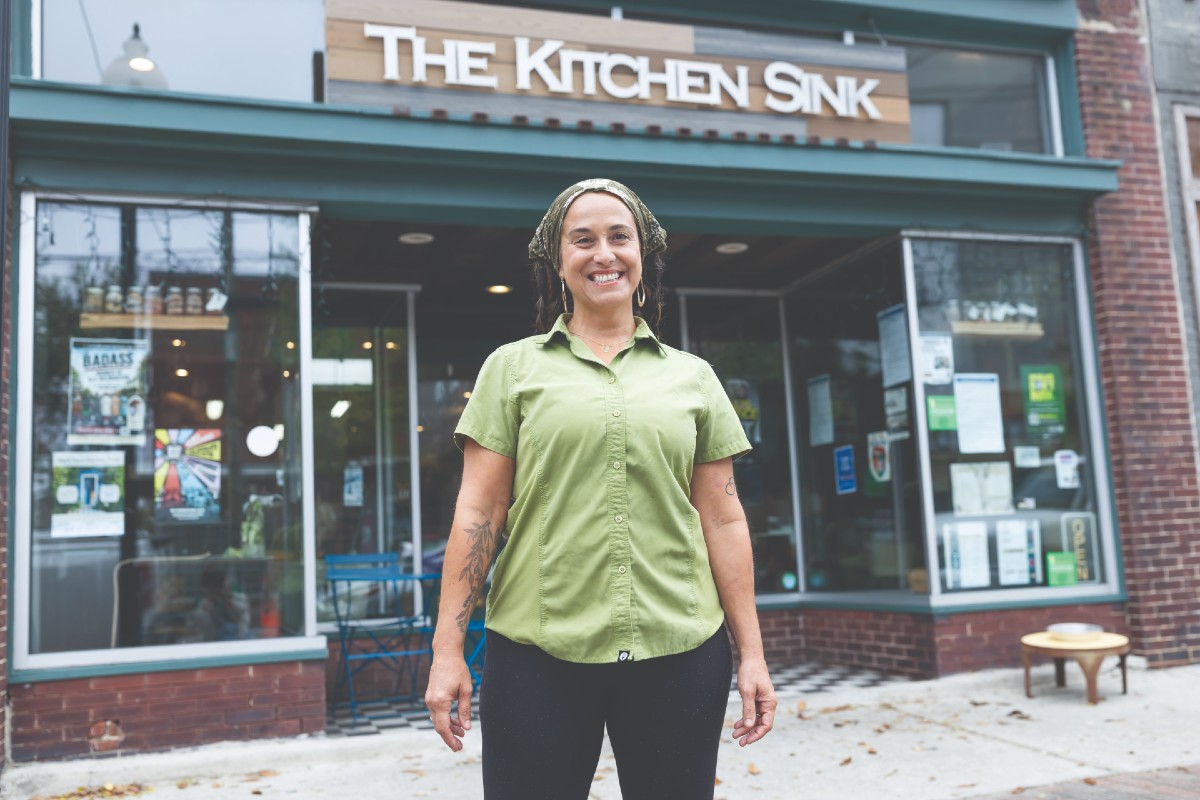
Mitchell is facing many of the same struggles as other restaurants. Despite the challenges, Mitchell said she won’t compromise on food quali...

Industry professionals say people seem much more willing these days to travel to the Wilmington area outside of the traditional summer vacat...

The 2026 WilmingtonBiz: Book on Business is an annual publication showcasing the Wilmington region as a center of business.