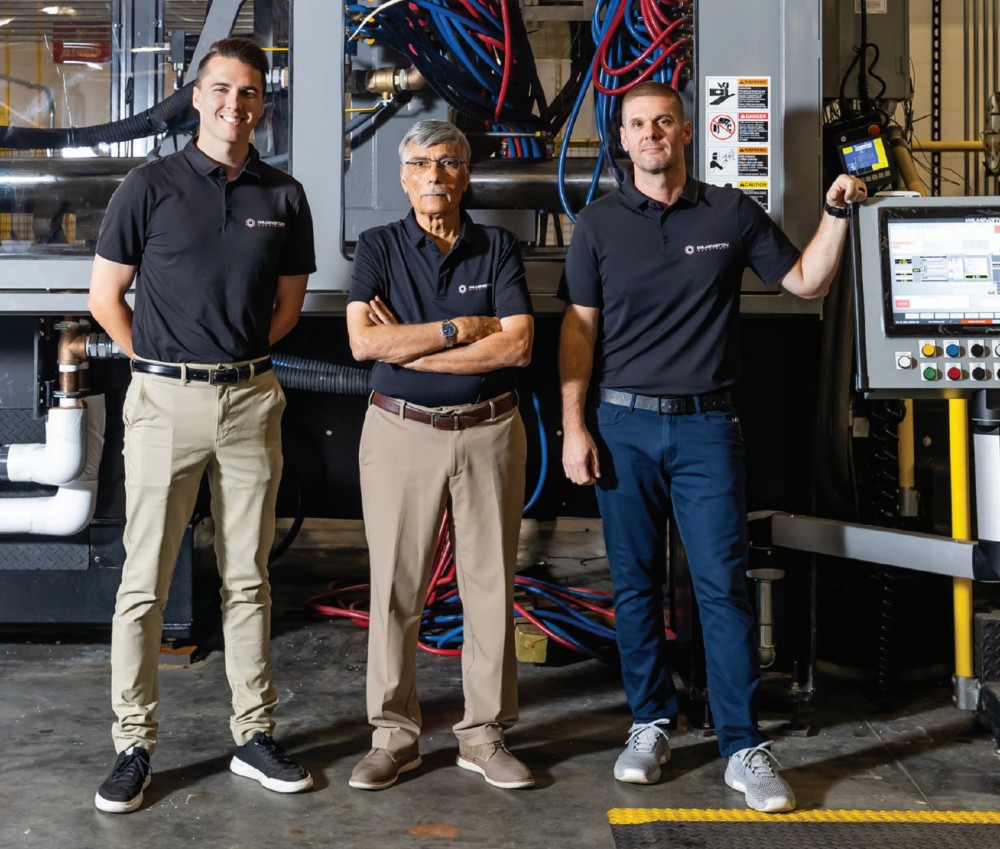
Wilmington-based Augwork AI is reimaging how small and midsize companies can leverage AI to improve business outcomes
Artificial intelligence is no longer primarily a technology question for small and midsize businesses. It is an operating-model question: Which work should remain fully human, which tasks can be supported or replaced by AI, and what oversight is needed to preserve trust and accountability? Leaders who answer those questions clearly will gain more durable value than those who simply add another tool.
Many companies have begun by using AI as a more conversational search engine—asking focused questions, drafting text or summarizing information. Those uses can be helpful, but they represent only a fraction of what the technology can contribute. The larger opportunity is to connect AI to everyday operations so it can support workflows, complete defined tasks and help employees spend more time on work that requires judgment, relationships and experience.
Lowering the Barrier to Adoption
For small and midsize businesses, the main barrier to AI adoption is rarely a lack of interest. It is the difficulty of converting broad enthusiasm into a defined workflow, clear accountability and a result the organization can measure. Closing that gap requires more than access to technology; it requires disciplined choices about where AI belongs in the operating model.
A useful starting point is to evaluate potential AI work against four questions: Is the task common enough to matter? Is the desired outcome clear? Can a person review exceptions or high-consequence decisions? And can the organization measure whether performance improves? Tasks that meet those tests are better candidates for early adoption than work that is ambiguous, infrequent or difficult to verify.
Role-Based AI as an Operating Model
A role-based approach offers one practical answer to the operating-model challenge. Rather than treating AI as a general-purpose assistant, organizations can assign it defined business roles within a controlled environment. Each role can be configured with a job description, role-specific knowledge, measurable responsibilities and explicit boundaries for human review.
That structure matters because useful AI adoption depends less on the novelty of a model than on how clearly work is defined. Business development, accounts payable and receivable, and customer support are examples of functions with recurring workflows, identifiable handoffs and outcomes that can be assessed. The same logic can be applied to specialized industry processes when responsibilities, systems and review points are clearly established.
From Headlines to Useful Work
AI is moving quickly, but most businesses do not need to chase every new model or trend. They need practical ways to improve service, reduce administrative burden and help good employees accomplish more. Most AI tools and agents today still operate as stand-alone applications or chat interfaces, requiring people to bring work to them. A key feature of the Augwork platform is a different approach: its role-based AI employees are designed to operate where work already happens, connecting across the communication, productivity, accounting and industry systems a business already uses. The objective is not integration for its own sake, but continuity within real workflows—while following established permissions, retaining only relevant business context, supporting reliable handoffs and keeping consequential decisions under human authority.
For Wilmington’s business community, the company’s launch also reflects a broader shift: meaningful AI adoption is no longer limited to large enterprises. Small and midsize organizations can begin with a specific role; connect it to the tools their teams already use and evaluate the results in real work. Augwork applies this operating model through private, role-based AI employees designed around defined responsibilities, persistent organizational knowledge and clear human oversight. By connecting those roles to familiar systems, the company aims to help businesses delegate well-defined work while keeping judgment, relationships and accountability firmly in people’s hands. The larger leadership lesson is straightforward—not AI for its own sake, but thoughtfully governed digital capacity that helps people work more effectively and strengthens operations over time.
Read more at
augwork.ai.