Carrie Assata moved to Wilmington from New York City to be near her mom, and, inevitably, fell in love.
As a poet and activist, Assata felt called to the city – specifically to its history and ancestral lineage. She established Speak Ya Peace, a platform for poets, writers and musicians in 2019 and hosts monthly open mic nights at the Fuzzy Needle, an indie bookstore tucked into the Cargo District.
“If anything, we want to be known as not only poets but also as agents of literacy,” Assata said, “igniting the joy and the need behind desiring to read a book.”
While it may be best known as a summer destination, Wilmington has become a nesting place for artists and writers of all degrees, from creative writing students with aspirations of memoirs and short stories to New York Times best-selling authors and self-published authors.
With supportive programming from the likes of New Hanover County Public Library and the Friends of the New Hanover County Library, which hosts the Cape Fear Book Festival; a growing network of independent bookstores; and the draw of University of North Carolina Wilmington’s acclaimed creative writing program, the city harbors a diverse community of writers.
Wilmington “is no longer just a place that people come to for tourism,” said Wiley Cash, a bestselling author, who settled here in 2013. “There’s plenty of that, but it’s now cultural tourism and not just beach tourism.
“These are writers who work,” he said of the city’s authors. “These aren’t writers who just talk about writing on Twitter or X.”
Cash added, “We’re pretty far removed from the New York literary scene. Writing is a way of life; it’s precious to us. It’s not cute; it’s much more blue collar. It’s everything.”
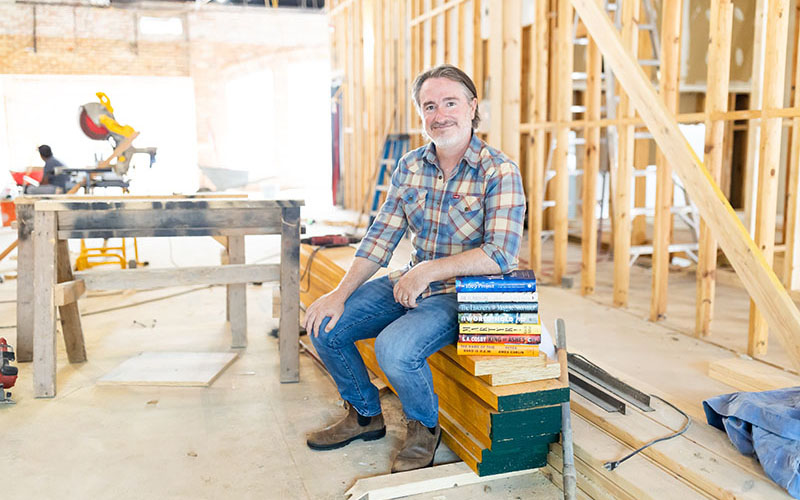
Cash and his wife, Mallory, plan to open a bookstore in downtown Wilmington later this year, with hopes of creating a central gathering space for writers that doesn’t overlap with existing independent bookstore spaces.
Floodplain Books will have room to host large events of around 100 people, with access to an upstairs shared event space that accommodates up to 300 people.
More than anything, Cash envisions the space as an anchor for a broadening literary ecosystem. Despite its vitality and the array of writers who settle here, Wilmington’s literary community still lacks centrality.
“There’s a well of talent here, and I am still figuring out how big it is and how deep it is,” said Shannon Rae Gentry, executive director of Wilmington’s Encore magazine, an alternative arts and culture magazine. “We have lots of talent everywhere. It’s just kind of scattered.”
Gentry, who moved to Wilmington from Savannah in 2011, has witnessed the loss of various local literary publications and ways to get paid for writing over time.
In general, the national arts economy has been in decline due to cuts in public funding, the advent of artificial intelligence and economic tumult. According to Rhonda Bellamy, president and CEO of the Arts Council of Wilmington and New Hanover County, Wilmington is more fortunate than most to have access to grants supporting writers – especially amid dwindling pools of funding.
The N.C. Arts Council cut its $25,000 Artist Support Grant fund in half this year, Bellamy said, but the council she leads maintained the original fund amount.
“The opportunity to expand funding specifically for literary artists and literary programming would be one of the ways that we can build the infrastructure,” she said.
A major anchor for writers in the area, UNCW’s creative writing programs, offers a gateway into publishing and writing workshops taught by bestselling authors, such as Jason Mott and Nina de Gramont.
Anna Lena Phillips Bell, poet and associate professor in the creative writing department at UNCW, published her second book of poetry this year.
“The writers who do stay here in town really are committed to that sense of literary community and committed to each other in a way that I think is really beautiful,” she said.
While programming certainly spills over into the community – some student writers teach creative writing workshops with partnering schools, and the program’s annual Writers’ Week is free and open to an eager public – a writer unaffiliated with the university’s program may have to work a little harder to find the same sense of community or structure.
“We have this, what I describe as a vibrant writing community, and yet I’m not sure if the average person in town even knows that all of these things exist,” said Emily Smith, associate professor and director of The Publishing Laboratory at UNCW.
Smith is also the publisher and founder of Lookout Books – a publishing house for emerging and underrepresented voices – and Ecotone magazine, a semiannual literary magazine.
“It feels to me, as somebody who’s lived here for 23 years, that more people are finding Wilmington,” Smith said. “And that, with that influx of new people, they’ll innovate and come up with new things and realize that there’s a culture and economy here to support it. And we’ll build it.”
Gentry, who frequently collaborates with Assata’s Speak Ya Peace, finds the creative community disjointed despite the city’s abundance of artists.
“When we talk about the resources that are available and the workshops and everything, it kind of depends on what circle you’re in, or what program you’re a part of,” Gentry said.
Wilmington’s existing literary community relies in no small part on independent bookstores hosting writing workshops, book signings or events under one roof.
Cash said independent bookstores made his career possible by supporting his first novel, published in 2012.
“I would not have had a career if that novel had been launched onto Amazon or if it sat face out on a shelf for two weeks in Barnes & Noble, and then disappeared,” he said. “It was embraced by the independent bookstore sales reps, and it was enormous because of that.”
Assata said, “Readers are leaders, and if we want our children to be able to pick up from where we left off at, we have to lead them to the books that will help shape their lives.”
See more stories on Creative Economy:
Local Musicians Navigate Shifting Scene
OPINION: Thalian Hall Invests in Education and More

Wilmington Startup Develops New Approach To Divorce Resolution
Cierra Noffke
-
Oct 8, 2026
|
|
County Review Panel Reverses Approval Of Sledge Forest Development Plan
Cece Nunn
-
Oct 9, 2026
|
|
Residential Real Estate Firm To Build Office On Former Bank Site
Emma Dill
-
Oct 8, 2026
|
|
More Parking Planned For Soda Pop District
Emma Dill
-
Oct 9, 2026
|
|

“Our vision is to create a mini-golf experience that becomes a welcoming space for everyone who enjoys a fun adventure with friends and fami...
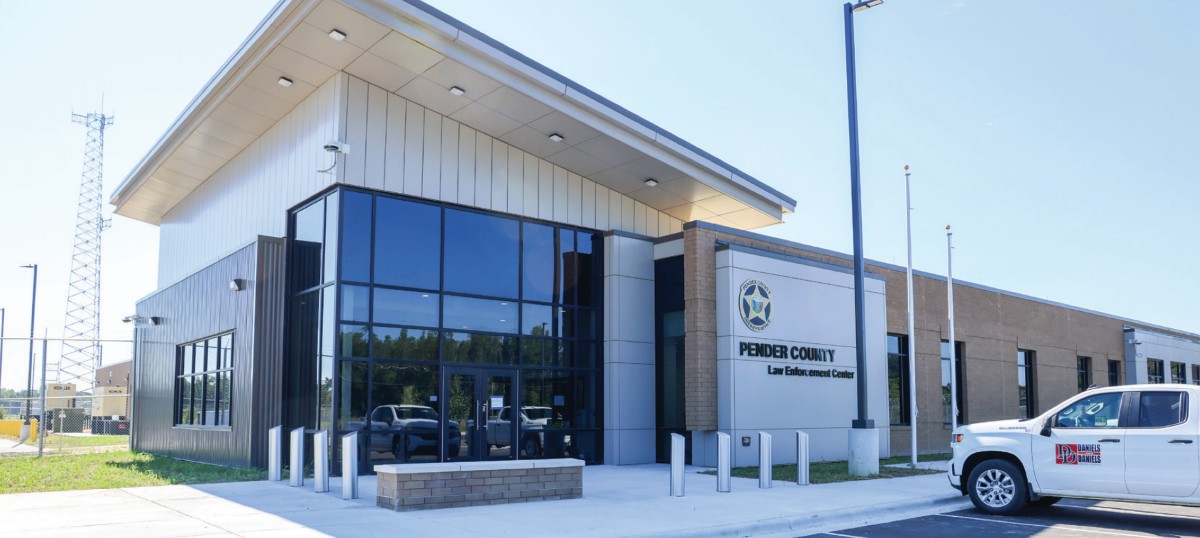
New buildings have opened or will soon open in Burgaw this year to support growing Pender County, including a new law enforcement center and...
Among the races this year is the contest between incumbent Sen. Michael Lee, R-New Hanover, and newcomer Jessica Bichler for N.C. Senate Dis...
The 2026 WilmingtonBiz: Book on Business is an annual publication showcasing the Wilmington region as a center of business.