A mission to nourish and sustain a community. That message runs strong, in one way or another, along a stretch of Castle Street in Wilmington, where Zora's Market & Kitchen sits snugly beside Mt. Moriah United Holy Church, their concrete slabs nearly joining and rooflines almost touching.
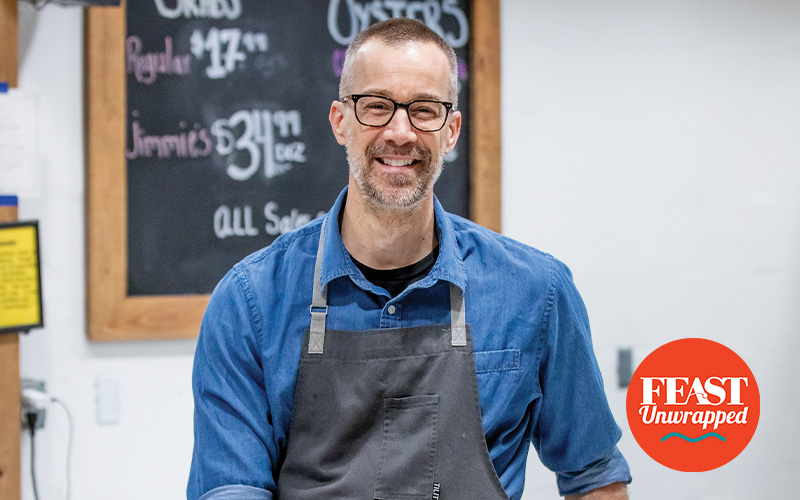
Zora's, at 1411 Castle St., is the newest venture from Dean Neff, a lauded chef who owns Seabird restaurant with his wife, Lydia Clopton. Here, in addition to selling premium, locally sourced seafood, they give away fish – free, once a week – as part of a mission to offer residents access to safe, sustainable seafood.
"Wouldn't it be great to have a resource in the community for people who are looking for sustenance fish protein to be able to find it and know where it's from and know that it's clean, safe and healthy?" Neff said.
Neff – a semifinalist for the 2026 James Beard Foundation Outstanding Chef Award – first posed this question several years ago while serving on an advisory board at Duke University, where his concern for safe fish intersected with research into Cape Fear River pollution. From that work, the idea for a local fish bank with safe, farm-raised fish was hatched.
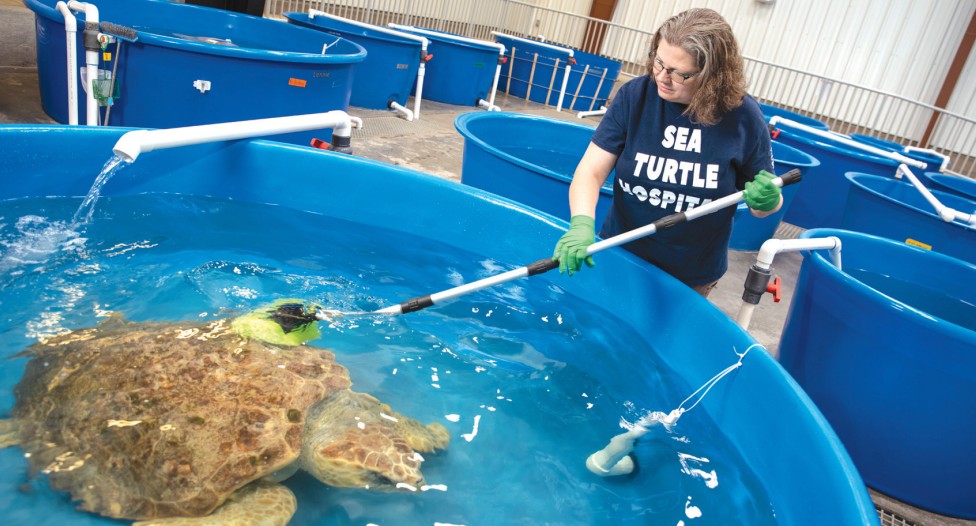
Neff said he took the concept to the University of North Carolina Wilmington's Aquaculture Program, home to a pilot commercial-scale fish hatchery and nursery capable of raising about 70,000 black sea bass to the advanced fingerling, or juvenile fish, stage. "They were like, 'We absolutely love this idea. We're going to do everything that we can to make it happen,'" Neff said.
Unlike wild-caught fish, farm-raised fish are spawned and raised in controlled environments – in UNCW's case, multiple tanks of varying sizes – where there is greater monitoring for contaminant exposure. Small grade fish from these tanks – ones more difficult to sell because of their size – make perfect fish bank candidates.
If not, "they'll get thrown away; they'll get turned into, you know, mulch or whatever," said Neff.
Instead, these sea bass lightweights, about 20 a week, make their crosstown migration to Zora's, where each Wednesday "the fish are claimed almost instantly when we open up the phone lines at 10 in the morning," Neff said. "We could easily be doing five, 10, 20 times that amount of fish," he said. "So, I think it's a matter of figuring out what it would take to bring it to the next level."
Pickups are Thursday and Friday, Neff said. "When the customers show up, they say, 'We'd like them cut down the back, butterflied and scaled,' and we're good to go, and so we'll cut them however they want – all for free."
Giving options to "people who are consuming fish from areas that might be polluted with toxins like mercury, for example, especially if they're of childbearing age or a young child, is very important," he said.
Neff imagines it's how the original Zora would have wanted it. "Zora (Singleton) was a really well-loved figure in the community and did a lot of great things. She was a force for good," he said. She died in 1991, according to Edible Port City.
In 2024, Neff and Clopton bought the seafood market from its most recent owners, Ronnie and Revonda Williams, who had called the space Ronnie's Crab Shack at Zora's.
A trip to Wilmington's zoning office one day unwittingly put Neff in touch with Singleton's granddaughter, who worked there. "She started telling me about her grandmother, Zora, whom she and others called 'Big Mama,'" Neff recalled. "There were all these stories. At one point, I think both of us were crying."
More stories followed about Singleton and the seafood market she opened in the 1950s. "Her granddaughter came to tour the market and told us how they would boil, like, 100 pounds of shrimp a day in a giant pot," said Neff. She talked about how Singleton, who lived in the house next door, "would cook a meal for everybody that worked there in her kitchen, and everybody would sit down at the table after the shift."
And perhaps the best story of all about the woman who made it her mission to ensure everyone had a seat and a meal: "Zora would sleep in the back bedroom (of her house), so she could hear the delivery truck for the fish pulling up early in the morning, so she could be up and out letting them in to unload," Neff said.
Initiatives like the fish bank, for example, and working alongside community partners such as UNCW and others benefit everyone, he said. "I feel like when we see a need, and we see an opportunity to work within the community and do things together on a local level to make life better, it makes us all better," Neff said. "It feels better than feeling helpless about things that are bigger than our local community."