This Insights is contributed by Edward Graham, professor of finance, and Adam Jones, assistant professor of economics in the Department of Economics and Finance, the Cameron School of Business at UNCW.
A Little Background
The Cameron School is charged with introducing students to the ebb and flow of commerce, to the underlying precepts of the business world, and to the theories and tools that brace the student for success after graduation. Faculty, in turn, remain abreast of current topics in their given fields through continuing and, hopefully, productive research agendas. For the economics or finance professor, for example, this includes the study of regional and national patterns in the economy. In this light, the real estate and financial crisis garnered endless study and research into factors impacting home values was encouraged. That research confirmed the expanding national real estate bubble through 2006 or 2007, the bubble’s deflation until early 2012, and improving conditions in the Cape Fear Region over the past few years.
Published studies note the importance of such factors as unemployment and personal income in describing housing prices everywhere, and more detailed work affirms the home-value impacts of such factors as the proximity of the home to the ocean (a good thing) or a landfill (not so good). Gated communities, nearby criminal activity, home and lot size, and closeness to a golf course have the expected impacts. Some factors, however, have uncertain effects on housing values. Among these “uncertain” factors are speed bumps. The mother of a small child may treasure the existence of a speed bump near her home, slowing cars as they pass, but a middle-aged owner of a low-clearance 1956 Corvette likely holds a different view; the first homeowner would pay a premium for that “speed-bump protected” home, but the classic car owner would not. Those differing viewpoints, and anecdotal remarks in the housing and Realtor communities, motivated real estate and economics faculty in the Cameron school to study the issue. The evidence they gathered suggests that speed bumps, despite their attractiveness to the mother above, may have a detrimental impact on home values.
The Speed Bump “Story” and Housing Values
Newly installed speed bumps invite a plethora of responses from proximate homeowners, drivers and policy makers: nearby homeowners may celebrate the installation as a tangible contributor to increased traffic safety with slower speeds; other homeowners may lament the bumps as a detriment to the quality of life (and home values) for those living nearby; and many drivers are annoyed by speed bumps, for their intrusive abbreviation of a car’s progress and potential damage to a car’s suspension. The bumps reduce fuel efficiency and evidence suggests they contribute to increased air pollution. Policymakers may celebrate the speed bumps as evidence of their concern for homeowner and traffic safety, but more enlightened public employees might appreciate the negative externality that the speed bump becomes as nearby home values and qualities of life decline, if modestly. And everyone, everywhere, can safely claim that speed bumps slow emergency vehicle response times. Prospective new home buyers may reject out-of-hand the purchase of a home with a noteworthy speed bump nearby, contemplating the traversal of said impediment thousands of times during a typical ownership period. No circulating study, however, measured precisely the property value-impacts of speed bumps. The research described here filled that void.
The Cameron faculty was able to gather home-selling data for a neighborhood populated by speed bumps. Sparing the reader the statistical detail included in academic papers, the findings can be fairly easily described: The more valuable houses were newer, larger and farther from the “main drag.” In addition, the evidence suggested that as more speed bumps were traversed – after controlling for a multitude of other descriptive factors such as home size and age – home values declined. And the declination was not sensitive to the year of sale or the type of home. The homes examined sold, for the most part, at prices between $175,000 and $300,000 (the average was around $250,000), and each speed bump between the main drag and the house appeared to reduce home values by $5,000 or more.
Concluding Remarks
Despite their attractiveness to some homeowners, speed bumps modestly and adversely impact nearby property values, even after controlling for other factors that influence house prices. Findings are meaningful to the prospective homeowner, home seller, public policymakers (who decide whether or not to install – or remove - speed bumps), real estate investor and mortgage lender. Each of these parties is clearly a stakeholder in the home whose value is impacted by speed bumps and each benefit from these findings.
Discouragements, as well, by New Hanover County policymakers of new speed bumps seem to be well-founded.
Robert T. Burrus, Jr., Ph.D., is the dean of the Cameron School of Business at the University of North Carolina Wilmington, named in June 2015. Burrus joined the UNCW faculty in 1998. Prior to his current position, Burrus was interim dean, associate dean of undergraduate studies and the chair of the department of economics and finance. Burrus earned a Ph.D. and a master’s degree in economics from the University of Virginia and a bachelor’s degree in mathematical economics from Wake Forest University. The Cameron School of Business has approximately 60 full-time faculty members and 20 administrative and staff members. The AACSB-accredited business school currently enrolls approximately 2,000 undergraduate students in three degree programs and 200 graduate students in four degree programs. The school also houses the prestigious Cameron Executive Network, a group of more than 200 retired and practicing executives that provide one-on-one mentoring for Cameron students. To learn more about the Cameron School of Business, please visithttp://csb.uncw.edu/. Questions and comments can be sent to [email protected].

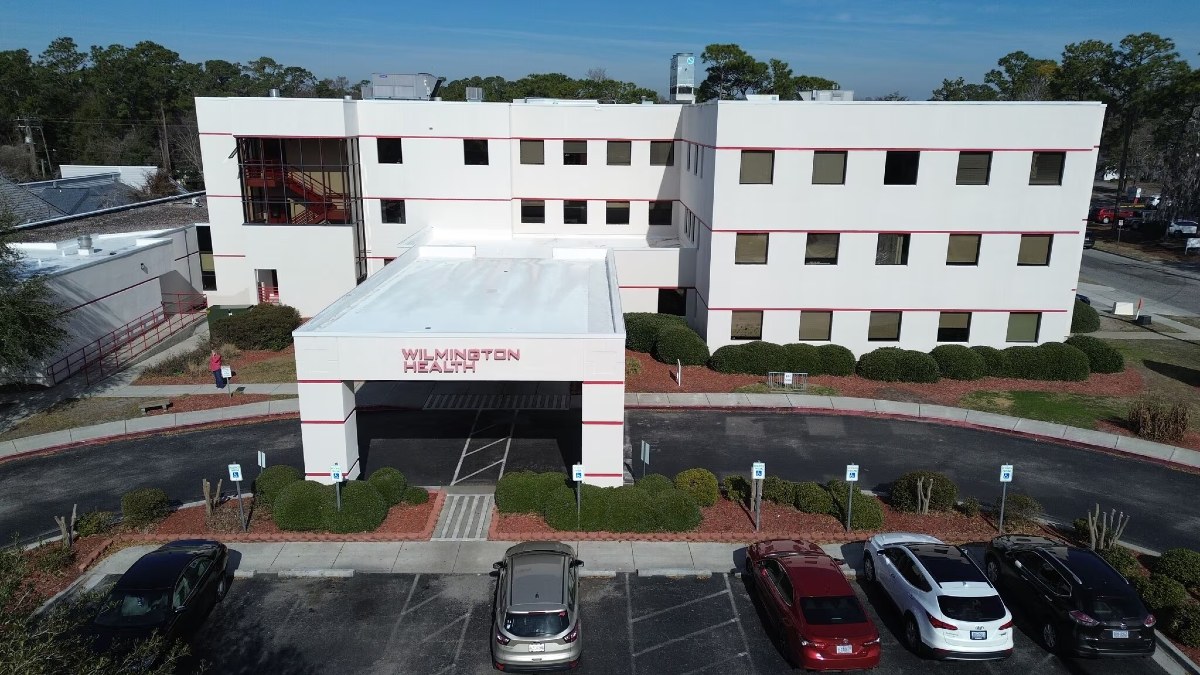
Wilmington Health Facility Sells For $9.4M
Cierra Noffke
-
Oct 26, 2026
|

Uncertainty hangs over the hemp industry, including businesses in Wilmington that depend on the sale of hemp-based THC products....
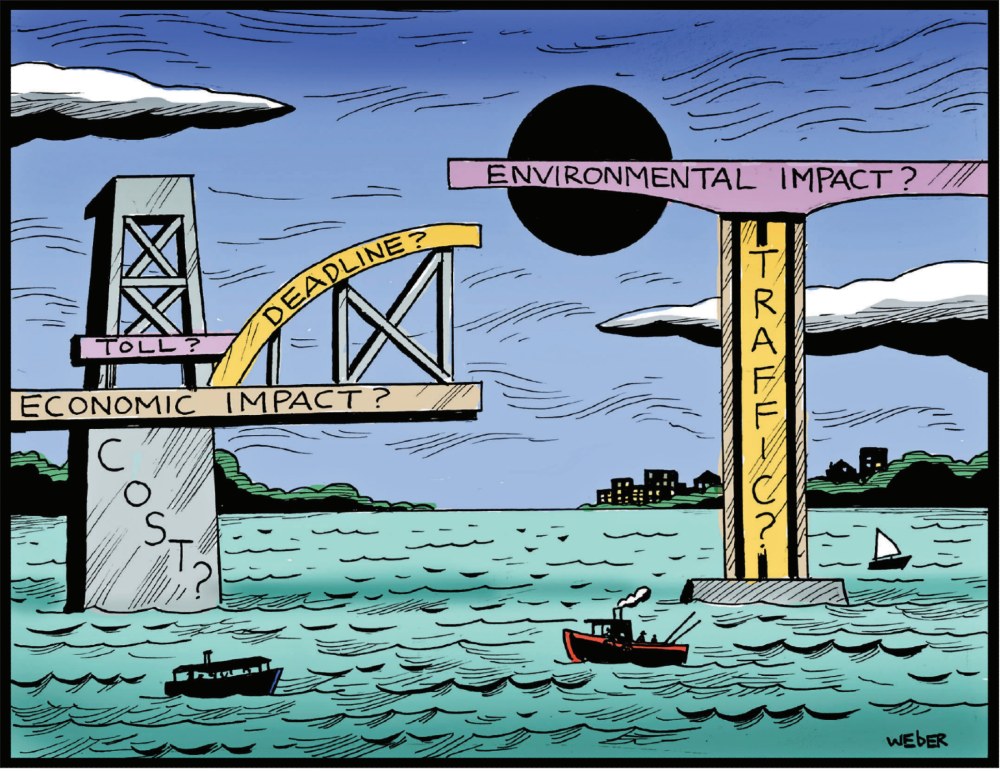
Support for the lower, movable-span bridge dominated spoken comments at the public hearings, and city officials have thrown their support be...
Five candidates are vying for two seats on the New Hanover County board....

The 2026 WilmingtonBiz: Book on Business is an annual publication showcasing the Wilmington region as a center of business.