This Insights article was contributed by Dr. Victoria Hansen, Associate Professor of Accounting, Cameron School of Business.
Tax season is upon us, so here are a few things to consider as you work on your taxes.
For the 2016 calendar year, some filing deadlines have changed. The deadlines for partnerships and C corporations have flipped. Partnership returns are now due March 15, while C corporation returns are now due April 15 (April 18 for 2017). Extensions of time to file can be requested until Sept. 15 (Sept. 16 for 2017) for both partnerships and C corporations.
As always, remember an extension of time to file is not an extension of time to pay. All payment of taxes is required by the original due date.
Several deductions and/or tax credits are available to businesses to help reduce their taxes. Maximizing the tax deductions available under the immediate expensing provisions of IRC Section 179 is one of the easiest ways to reduce your tax bill.
Section 179 allows businesses to elect to immediately expense and deduct up to $500,000 of depreciable tangible business property placed in service during the tax year. Section 179 can be applied to most depreciable tangible business property whether new or used or acquired by purchase or lease, as long as the property is placed in service before Dec. 31, 2016. As Section 179 was enacted as a “small business” tax incentive, the maximum allowable deduction of $500,000 is reduced dollar for dollar for businesses with purchases of depreciable tangible business property over $2,000,000. The $500,000 deduction is fully phased out with purchases of $2.5 million.
Bonus depreciation is also available for 2016 tax returns. Bonus depreciation allows for the deduction of 50 percent of the cost of most depreciable tangible business assets. Bonus depreciation applies to the same types of depreciable tangible business assets as the Section 179 deduction, but does not apply to used equipment. Bonus depreciation is generally taken after the Section 179 deduction is maximized. However, taxpayers can elect bonus depreciation even if they do not elect to take a Section 179 deduction.
In addition to enhanced depreciation deductions, qualifying manufactures engaged wholly or significantly in domestic production within the U.S. can qualify to reduce their tax bill through the Section 199 manufacturers’ deduction.
Qualifying manufacturers include taxpayers who are engaged in the: manufacture, production, growth or extraction of tangible personal property; production of qualified film; production of electricity, natural gas or water; construction of real property; and provision of architecture/engineering services. The Section 199 is calculated as nine percent of the net income from the qualified domestic production. Because the purpose of this deduction was to encourage domestic production and domestic hiring, the Section 199 is limited to 50 percent of the domestic production-related wages paid by the qualifying manufacturer.
Finally, businesses operating in such diverse industries as manufacturing and fabrication, software development, engineering, architecture, pharmaceutical, machining, aerospace and defense, food science, tool and die casting, foundries, and automobile development may also reduce their tax bill by claiming the research and development tax credit. The research and development tax credit allows businesses engaged in qualifying research to reduce their taxes by 20 percent (or 13 percent for the reduced credit) of qualifying research expenses. Qualifying research expenses include in-house wages and supplies attributable to qualifying research, certain time-sharing costs for computer use in qualifying research and 65 percent of contract research expenses - that is, amounts paid to outside contractors in the U.S. for conducting qualifying research on the taxpayer’s behalf.
Qualifying research is defined broadly as research undertaken for the purpose of discovering information that is technological in nature, where substantially all of the research activities constitute a process of experimentation, and the experimentation relates to a permitted purpose. This definition includes activities such as: developing new or improved products, processes or formulas; developing prototypes and models; developing or applying for patents; developing or improving software and/or technologies; building or improving manufacturing facilities; and streamlining internal processes.
Because of the broad nature of the definition of qualifying research, all businesses should examine whether they qualify for this tax credit.
The above deductions and credit are for federal tax purposes, and may not be applicable for state income tax purposes. In addition, the deductions and credit discussed are subject to additional rules and limitations.
Be sure to contact your tax professional before claiming any deductions or credits to make sure you qualify.
Robert T. Burrus, Jr., Ph.D., is the dean of the Cameron School of Business at the University of North Carolina Wilmington, named in June 2015. Burrus joined the UNCW faculty in 1998. Prior to his current position, Burrus was interim dean, associate dean of undergraduate studies and the chair of the department of economics and finance. Burrus earned a Ph.D. and a master’s degree in economics from the University of Virginia and a bachelor’s degree in mathematical economics from Wake Forest University. The Cameron School of Business has approximately 60 full-time faculty members and 20 administrative and staff members. The AACSB-accredited business school currently enrolls approximately 2,000 undergraduate students in three degree programs and 200 graduate students in four degree programs. The school also houses the prestigious Cameron Executive Network, a group of more than 200 retired and practicing executives that provide one-on-one mentoring for Cameron students. To learn more about the Cameron School of Business, please visit http://csb.uncw.edu/. Questions and comments can be sent to [email protected].

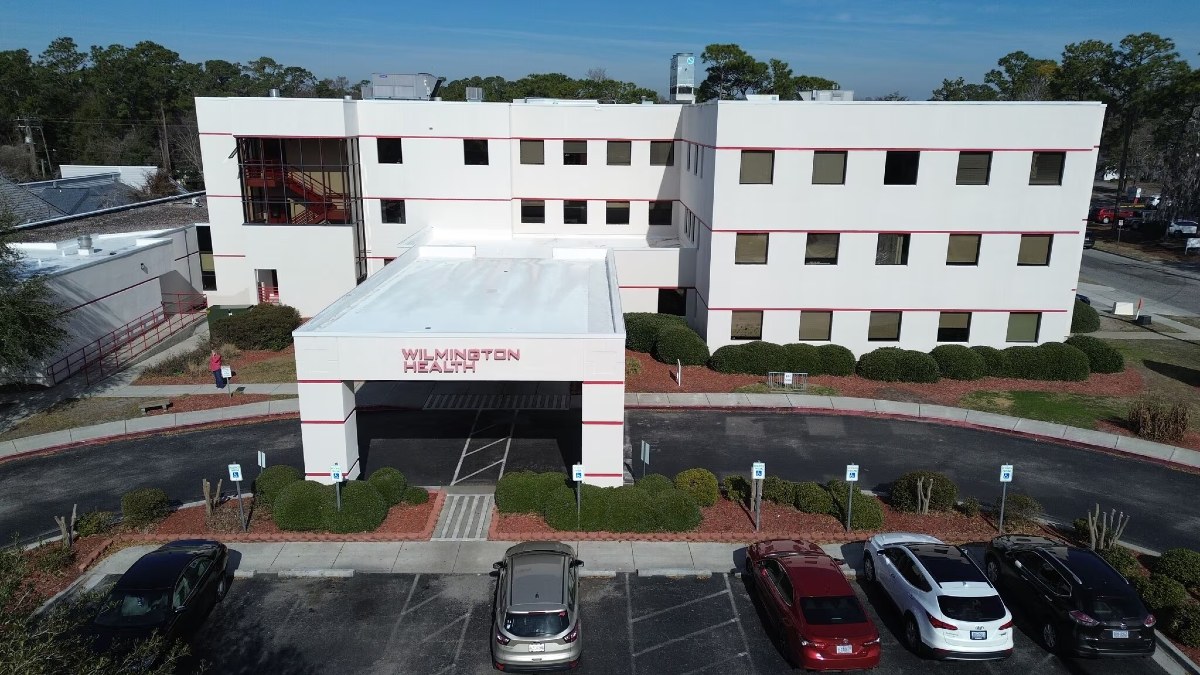
Wilmington Health Facility Sells For $9.4M
Cierra Noffke
-
Oct 26, 2026
|
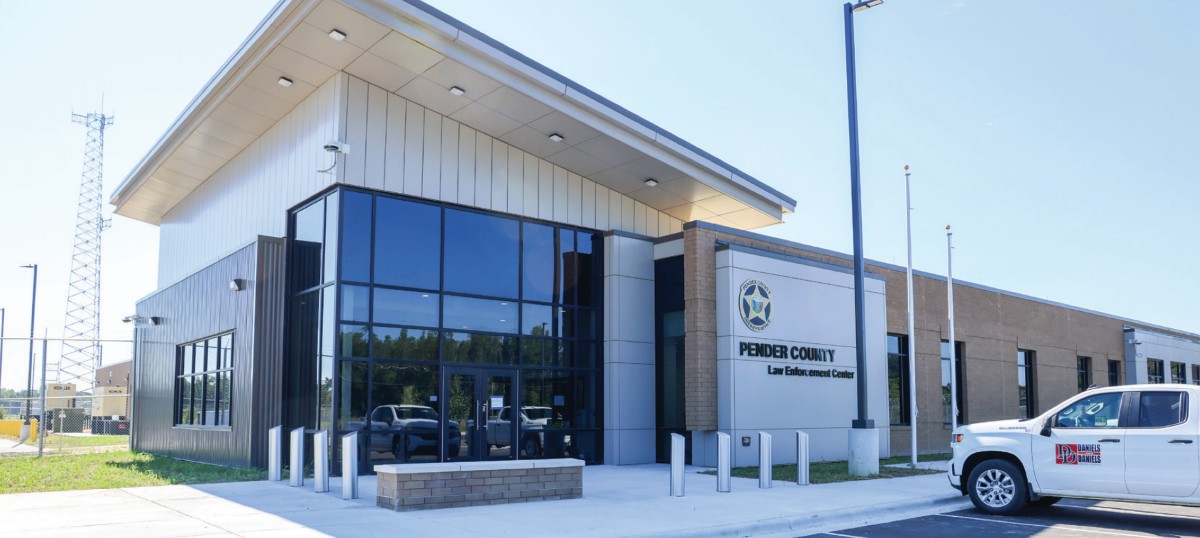
New buildings have opened or will soon open in Burgaw this year to support growing Pender County, including a new law enforcement center and...

While the state’s charter school sector grows, Wilmington charter schools are seeing demand of their own – presenting both opportunities and...
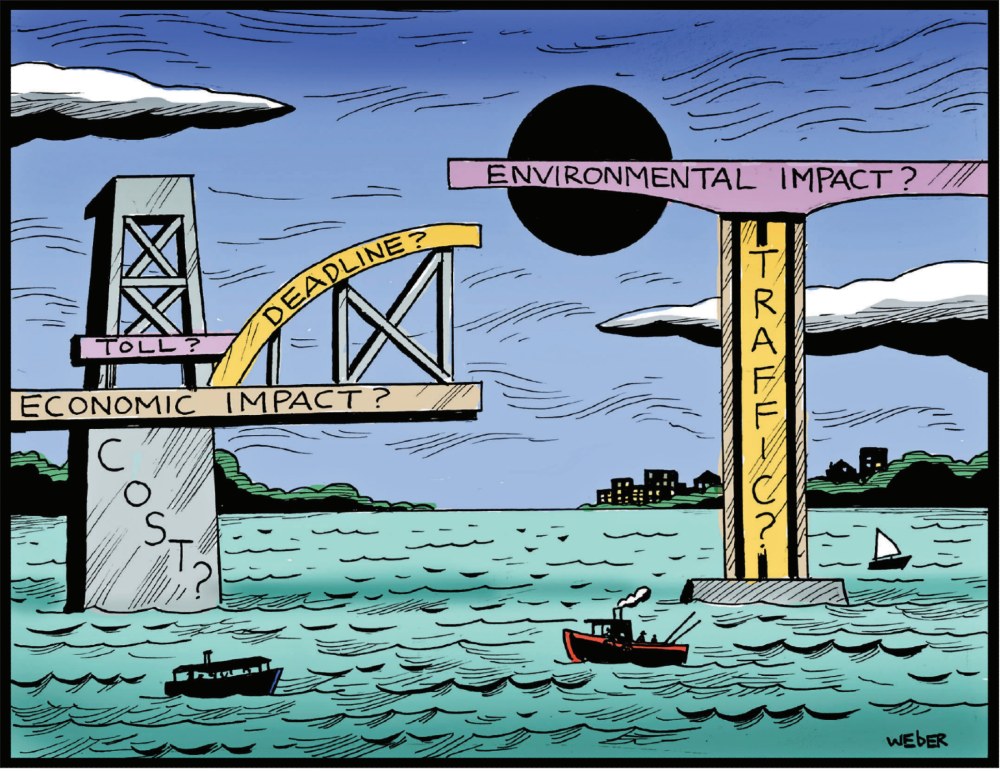
Support for the lower, movable-span bridge dominated spoken comments at the public hearings, and city officials have thrown their support be...
The 2026 WilmingtonBiz: Book on Business is an annual publication showcasing the Wilmington region as a center of business.