What would you like to know about the history of the internship? We could start with the trade guilds of Europe in the 11th and 12th centuries, the practical experience of apprenticeships beginning in the late 1800s, or the roles of messenger boys and copy boys. Formal internships, as we know them today, started to appear in the 1960s and truly developed during the 1980s, primarily through business schools.
The noted importance of and associated number of internships have increased significantly over the past three decades. According to the National Association of Colleges and Employers (NACE) Class of 2014 Student Survey, 61 percent of graduating seniors reported that they had an internship or co-op experience; employers reported full-time offers were made to 64.8 percent of those interns! Bloomberg Businessweek’s 2014 Undergraduate Business School Rankings show that 61 percent of students with internships have job offers prior to graduation, compared to 28 percent of students with no internship experience.
Who gains from an internship experience? Students have the opportunity to integrate academic curriculum and real-world work experience through internships. Internships can also help to confirm or redirect career decisions, enhance marketability, and further develop transferable skill sets such as communication, teamwork and problem-solving. Paid internships are extremely beneficial because students who fund their own schooling can gain experience and needed income simultaneously. Employers benefit by finding future employees, increasing employee-retention rates (yes, NACE has stats to support this, but we will spare you), enhancing perspectives with fresh ideas, giving back to the community and supporting students.
In the Cameron School, we have approximately 2,000 students enrolled in 10 undergraduate concentrations: accountancy, economics, entrepreneurship and business development, finance, human resource management, international business, management and leadership, management information systems, marketing (professional sales and research), and operations management. We also participate in the TransAtlantic Business School Alliance, a highly competitive dual degree program, sponsoring approximately 40 international students from countries such as France, Spain and Germany. These students form a highly qualified student workforce that has much to offer across the range of business disciplines. Based on the 2014 CSB Graduate Survey, approximately 67 percent of graduates reported completing an internship, with 23 percent completing more than one. Recent internships include Live Oak Bank, IBM, Bank of Tokyo (MUFG), nCino, Perdue and Coca-Cola.
Perhaps you are intrigued by the idea of hiring a business intern. What are the next steps? First the business must decide on the primary responsibilities of the intern, the projects that must be completed, and the pay. If needed, we can also provide information to assist you in the creation, or further development, of an internship position or program. These opportunities are then promoted directly to Cameron students that meet the position’s requirements and responsibilities. Our goal is to link resources directly to your business.
Our ultimate goal would for 100 percent of students to complete an internship with the majority completing more than one. We realize this goal is a process to be realized over time through the combined efforts of UNCW, the community, employers and student initiatives. However, we are committed to increasing internship opportunities for students, employers and the community. We understand just how essential internships are!
For more information about the CSB internship program contact Teresa Walker, Director of Work Practice at [email protected] or at 910.962.2466.
For 2014-2015, Dr. Robert T. Burrus, Jr. will serve as interim Dean of the Cameron School of Business at the University of North Carolina Wilmington. Before taking on the role of interim Dean, Burrus was the department chair for economics and finance and a professor of economics. He has been on Cameron’s faculty since 1998. The Cameron School of Business has 90 full-time faculty members and 29 administrative and staff members. The school hosts approximately 2,000 undergraduate students and 170 graduate students. International students come to study at Cameron from all over the world. The Cameron School of Business is AACSB accredited; offers capstone experiences; houses a Financial Trading Markets Room; provides for overseas learning opportunities; and is a founding member of the Trans-Atlantic Business School Alliance. To learn more about the Cameron School of Business, please visit http://csb.uncw.edu/. Questions and comments can be sent to [email protected].

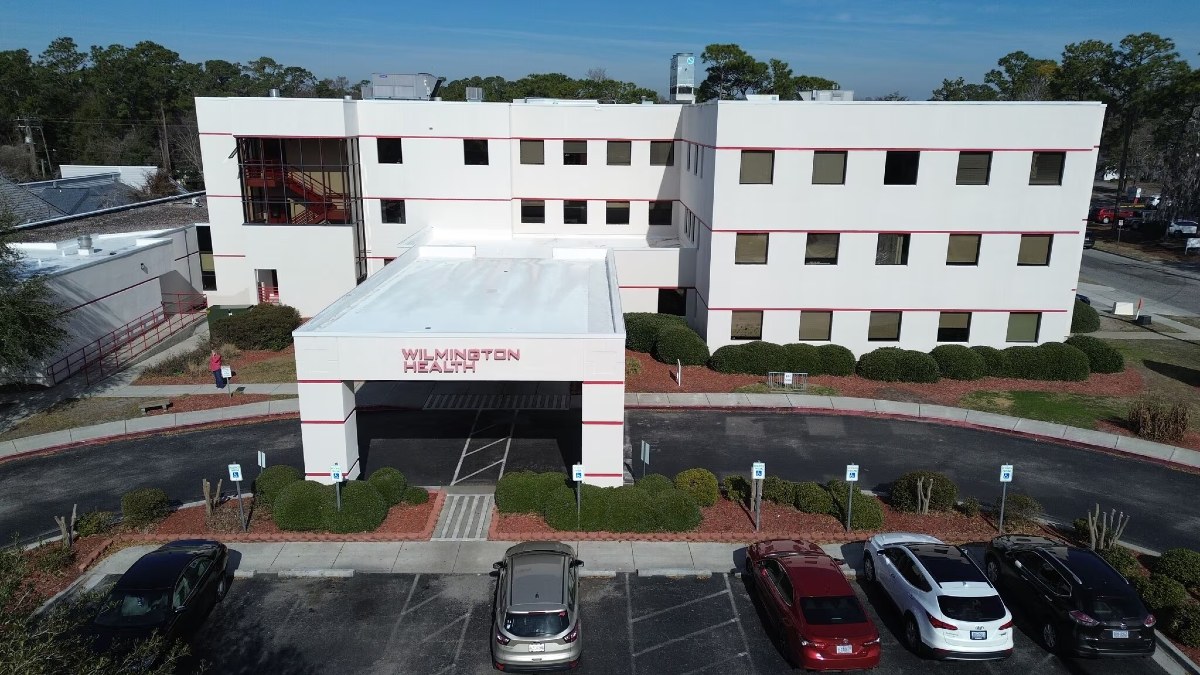
Wilmington Health Facility Sells For $9.4M
Cierra Noffke
-
Oct 26, 2026
|
Five candidates are vying for two seats on the New Hanover County board....

Industry professionals say people seem much more willing these days to travel to the Wilmington area outside of the traditional summer vacat...

Support for the lower, movable-span bridge dominated spoken comments at the public hearings, and city officials have thrown their support be...

The 2026 WilmingtonBiz: Book on Business is an annual publication showcasing the Wilmington region as a center of business.